LEXIFORGE
{Function-first, Reasoning-native}
Protein Design
Our discovery platform connects protein generation, experimental validation and closed-loop optimization.
LEXIFORGE
Biological reasoning.
Molecular precision.
LexiMind defines design strategy.
LexiGen generates and optimizes sequences. Together, they produce candidates for validation.
Reasoning-guided protein generation
01

Reason
Understand biological constraints in design and reason for the desired function.
02
Generate
Turn designs into protein sequences and structures to create new candidates.
03
Predict
Predict function for the generated candidates. Optimize for developability and immunogenicity.
04
Experiment & Learn
Wet-lab data continually calibrates models and informs the next cycle.
THE GENERATION ENGINE
Two models. One design system.
LexiMind · Design intelligence
Integrates sequence, 3D structure and biological context to identify key residues, define design constraints and guide protein engineering.
LexiGen · Generation and optimization
Gradient-guided proposals and full-structure verification work together in a two-stage Monte Carlo Tree Search. Multi-residue exploration identifies promising sequences; single-residue refinement improves selected candidates.
INPUT

Random
sequence

Reasoning + Constraints

LexiMind

INTERMEDIATE

Initial sequence
Generation + Search

LexiGen
OUTPUT

Final
sequence
PRECISION BY DESIGN
Generate new binders. Redesign existing leads.
De novo generation
Design binders for specified targets, epitopes and structural constraints. Experimental campaigns include miniproteins and VHH nanobodies.
Localized redesign
Optimize selected CDRs or key residues while preserving the surrounding sequence framework. Full-complex structure prediction evaluates each modification in context.
Together, these capabilities support binder discovery, affinity maturation and targeted lead optimization.
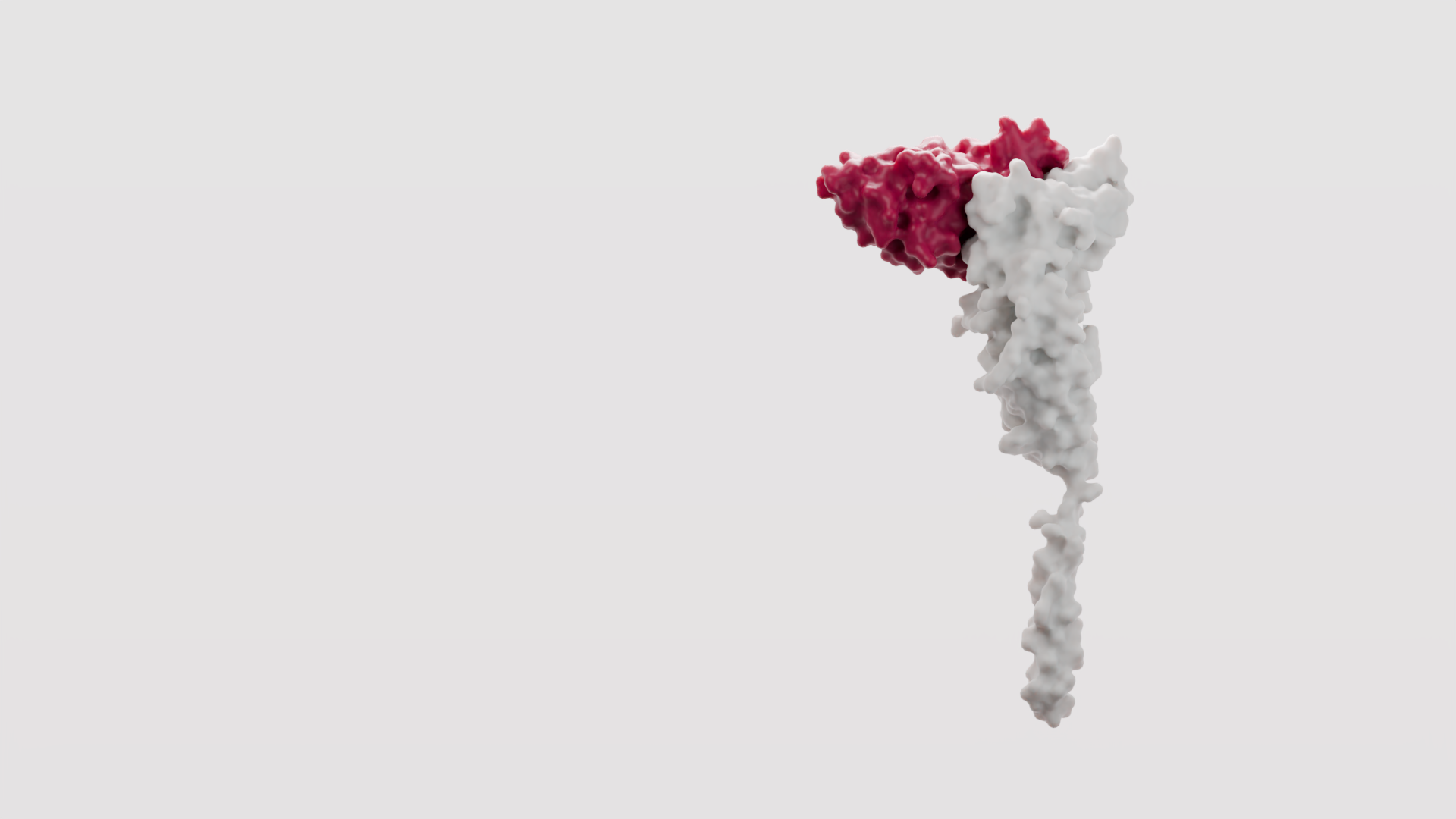
IFNAR2
VHH binder
Burgundy: designed binder · White: IFNAR2
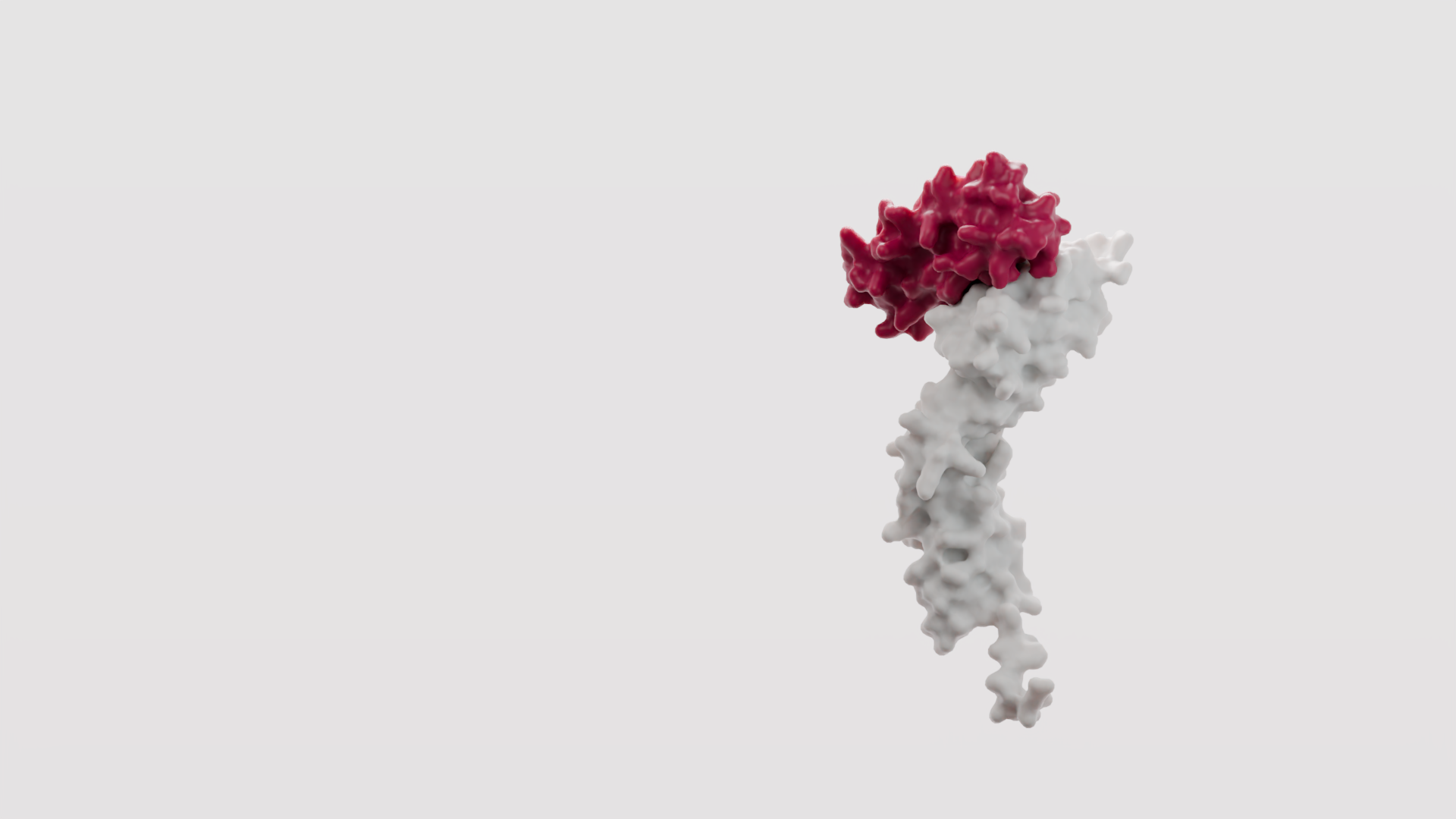
PD-L1
Miniprotein binder
Burgundy: designed binder · White: PD-L1
COMPUTATIONAL VALIDATION
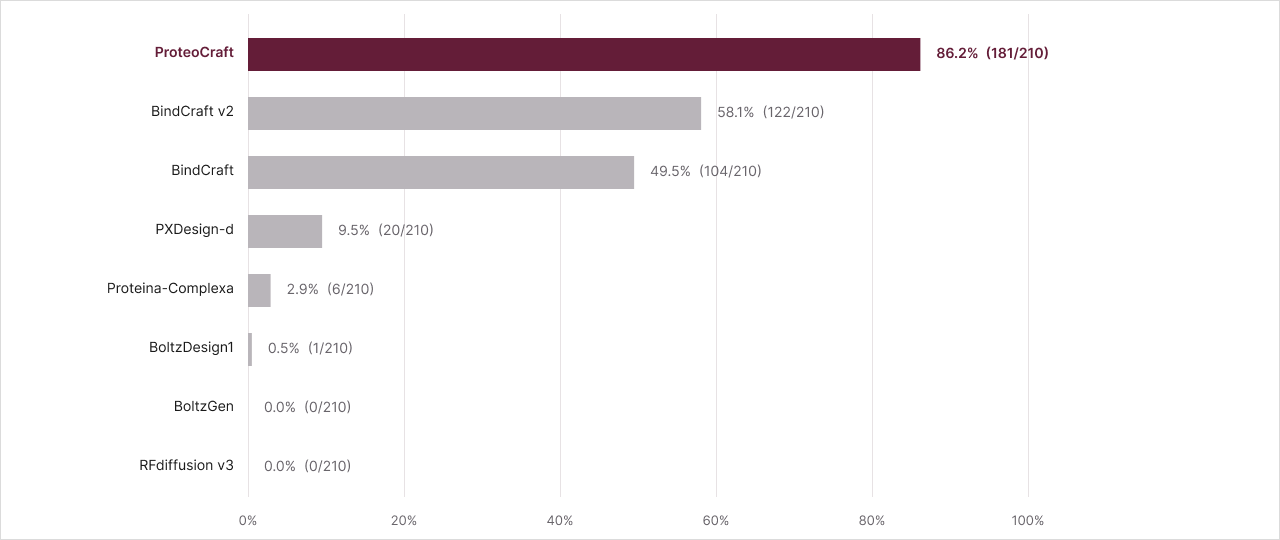
86.2% independent computational pass rate
Independent AF2-IG evaluation: 181 of 210 candidates (86.2%) passed strict computational criteria across eight protein targets and 14 target–epitope settings.
Under a separate ESMFold2 benchmark, two-stage tree search achieved a 54.3% strict pass rate (114/210), producing 2.85× as many qualifying candidates as Best-of-N at the same budget.
The Big inference configuration achieved a mean 3.57× end-to-end speedup with comparable mean interface confidence. Computational results are distinct from experimental binding.
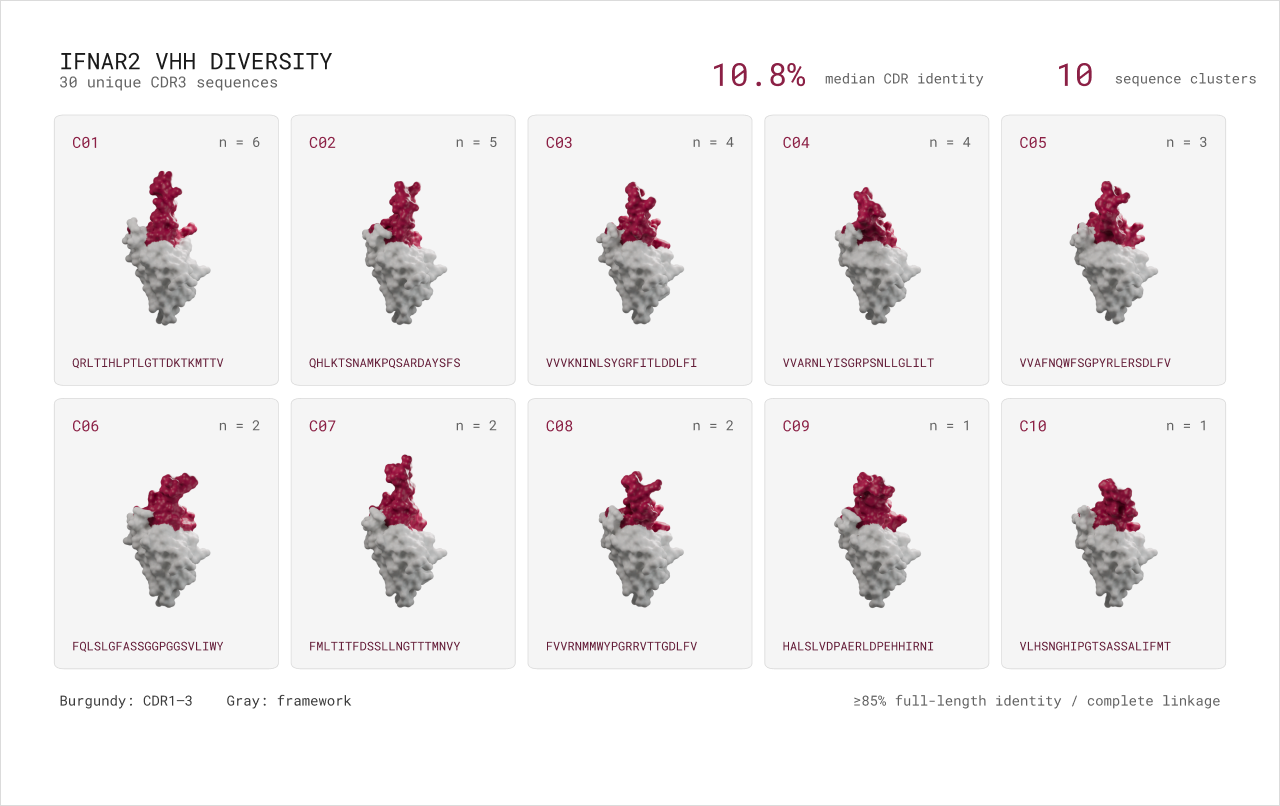
Diverse Designs - 30 VHH designs. 10 sequence clusters
At an 85% full-length sequence identity threshold, he 30 IFNAR2-targeted VHH designs grouped into 10 clusters with a median sequence identity of 10.8% across the combined CDRs.
This sequence diversity provides a broad set of candidates for comparative evaluation, optimization and lead selection.
WET-LAB VALIDATION
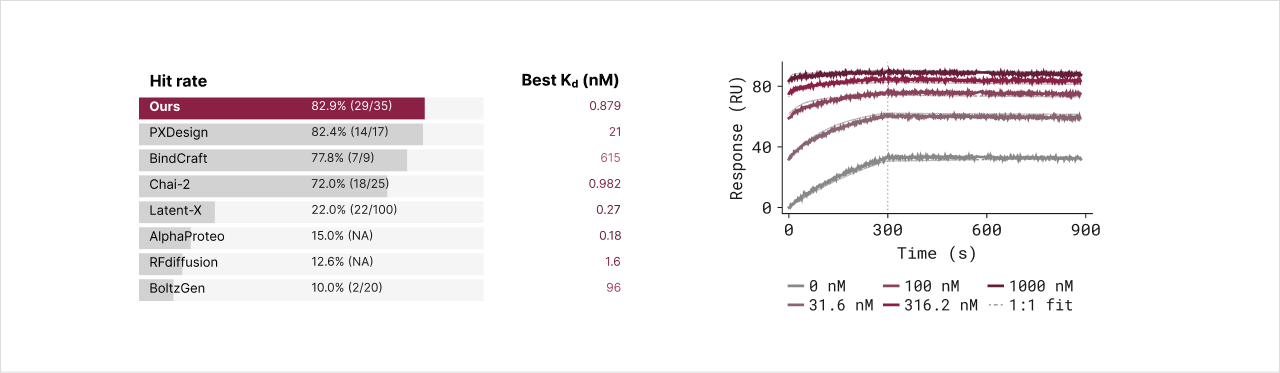
29 binding hits from 35 PD-L1 designs
PD-L1 miniproteins · Of the 35 expressed designs, 29 bound the target (82.9%). Six had fitted Kd values below 10 nM, with the best individual SPR fit yielding a Kd of 0.879 nM.
IFNAR2 · Binding was observed for 4 of 9 expressed VHH nanobodies and 5 of 27 expressed miniproteins. Across all three campaigns, 71 of 75 designs met the reported expression/loading criteria.
ACTIVE LEARNING
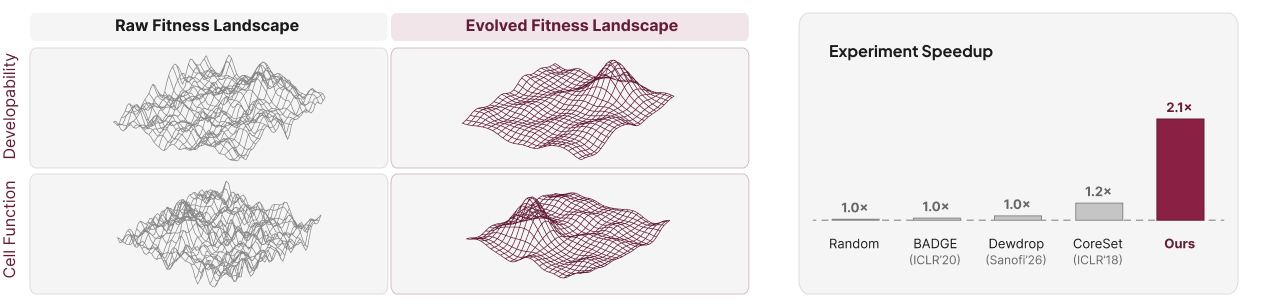
Make every experiment more informative.
Our active learning module prioritizes the most informative candidates for each experimental round. In internal VHH developability optimization tasks, it achieved comparable model performance with 53% less training data than conventional sampling.
This capability supports our long-term design-build-test-learn (DBTL) cycle, in which experimental feedback on affinity, developability and cellular function, together with assessments of sequence naturalness, will guide ongoing model development and candidate design.